Showing posts with label Hospitality. Show all posts

Thursday, 4 December 2014

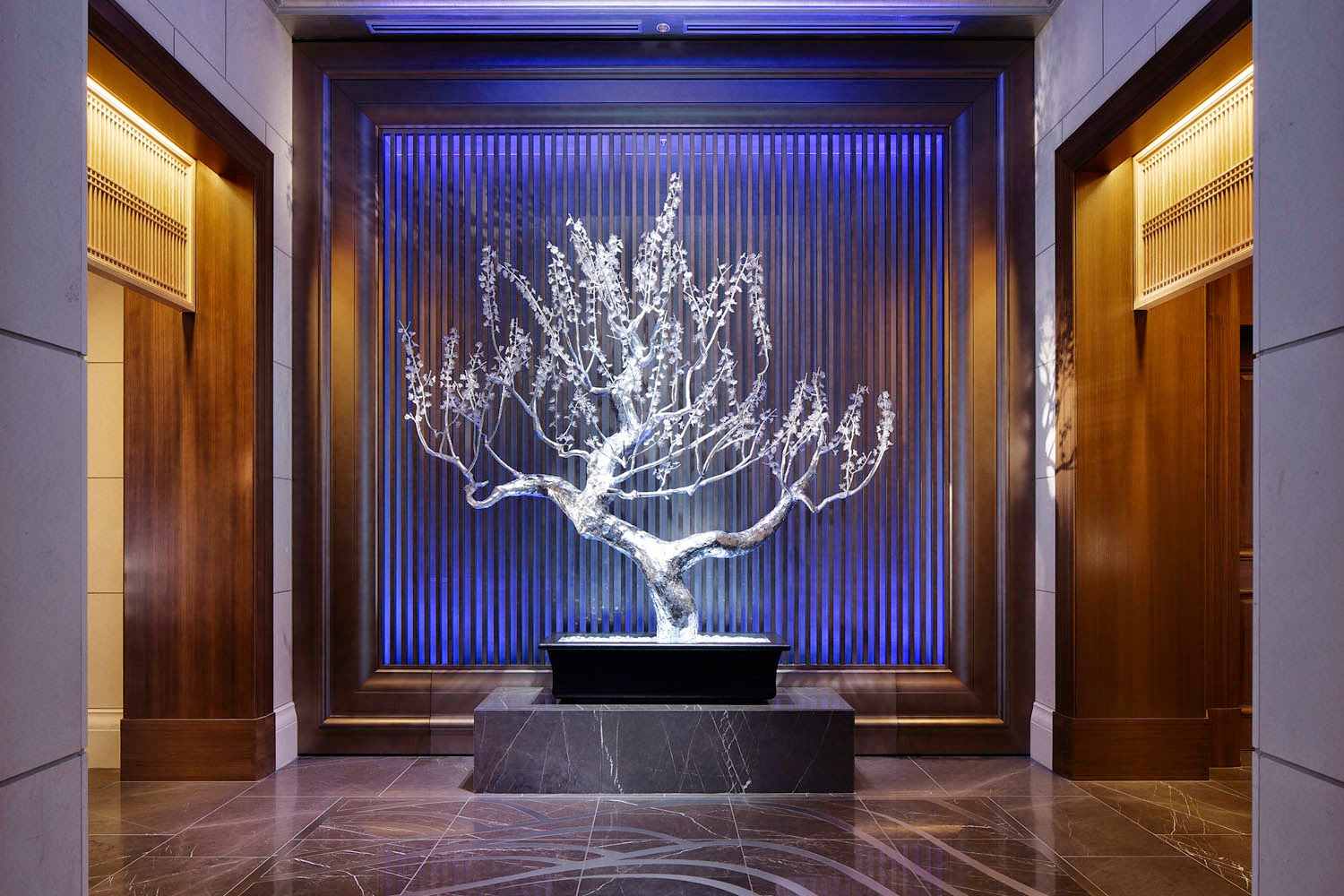
G.A wins big at EHDA and International Property Awards 2014

Great news from our parent company G.A Design in our core interior and architectural design field with two fantastic awards to end the year. The first is the European Hotel Design Awards, where we picked up best interior in the cafe bar/all day dining segment for The Rosebery at Mandarin Oriental London. You can see more on the submission here


The second, just confirmed last night, was that we won best global hotel interior design at the International Property Awards for St. Regis Osaka. This is especially satisfying as we came through the regional (Asia-Pacific) qualifying rounds before being shortlisted for the global award.


Monday, 27 October 2014

Big in China?

Illustration by Daniel Mitchell http://www.daniel-mitchell.co.uk/

Sometimes you just have to say ‘yes’ and worry about the consequences later…an email arrives saying we, G.A, have been invited by one of our biggest clients to speak at the Asia-Pacific Hotel Design Association’s 4th annual conference in Dalian, and am I free to do this?

The first thought is: what would I say? The second thought is: I have so much going on. The third thought is: where on earth is Dalian? The third thought, after a quick bit of Google mapping, tipped the decision in favour of a ‘yes’.

Dalian is pretty close to North Korea, a “2nd tier” city (‘only’ 6 million inhabitants – about the size of greater Kuala Lumpur - and everyone in Dalian refers to how ‘small’ the city is). It has an interesting history, having been founded by Russians, invaded and taken over by the Japanese, Russian again after WW2 then ‘gifted’ back to China as a sign of friendship between the two Communist countries.


I had never been to a “2nd tier” Chinese city before, and was interested to see a new part of this giant country. The conference, coming hot on the heels of our G.A rebranding and the opening of our Shanghai office would also be great exposure for the company. So it was a ‘yes’ then and let’s worry about the rest when it happens – necessity is the mother of invention, after all.

It was later I discovered there were no direct flights to Dalian from KL. This meant flying China Southern airlines from KL to Guangzhou (4 hours), then transferring on a domestic flight across from Guangzhou to Dalian (3 hours)*. 


'View' of Guangzhou coming into land. I have been there twice. Whenever I have been there it was covered in this soul-destroying pollution. For more thoughts on that, see Why we should be thankful for the haze

After a near-miss at customs in Guangzhou, I arrived at Dalian at night. I was greeted with a full bouquet of flowers and whisked off to Starwood’s 300-key Castle Hotel, part of its Luxury Collection, designed by HBA and only opened 1 month ago – the venue for the APHDA conference. The hotel was a reinterpretation of a French chateau, replete with marble flooring, chandeliers, grand staircases and reproduction furniture – a style very popular in China to denote ‘luxury’ and ‘success’, but distinctly odd and a bit Disney-esque to my British eyes. I can understand, however, why this kind of design is so popular in a country that has laboured under grim public/civic-minded architecture for so many years.


The Castle Hotel, Dalian

I was immediately impressed by the scale of the event, about 1,300 delegates were in the audience – and the way it had been set-up to include the biggest names in the industry, from across China, Hong Kong, Singapore. Previous guest speakers had included Tony Chi, Peter Remedios and Jean-Michel Gathy – so no pressure then.  And I was one of only a handful of Westerners in the room.


View from Dalian's main square (the biggest in Asia). The world's biggest and flattest half-pipe skatepark. And a giant unfinished bridge mid-construction in the background. Smog wasn't as bad here, but still noticeable.

The theme of the event was “Future Hotels”.  I am a fan of future-gazing, like most people, so this theme attracted me and I wrote a speech focused on what the hotel design of the future would be like. I won’t go into it here, but if you are interested I will post a separate link to the video of my speech when I have it.

The speech went down well, mainly because of G.A’s reputation in the region thanks to our great work on projects like W Taipei. For that I can only say again what great (and hard) work our team is doing around the world.

It also went down well because of the student-based audience – I suspect that not many event speeches in China encourage the audience to think and participate in a dialogue. I was nervous about doing this, given my experience in Asia in general is that people are very reticent about asking questions in a public forum. However, on the advice of Susan, my brilliant translator, we decided to go ahead and open up the discussion.

It was only after the speech, that I started to get a sense that ideas like ‘crowd-sourcing’ and group participation, discussion are considered more radical perhaps in China than elsewhere, especially amongst a large group of students (and to the back-drop of the student civil disobedience in Hong Kong).

I sensed there was a formula which they had been expecting – design firm principals turn-up and show their portfolio, talk about the past, how they ‘made it’ and got to their current position etc. Given that I am not a designer, I was reluctant to do that, so focused more on a group session trying to define the future of hotel design, using ideas harvested from the G.A global family and examples of our current work as stimulus.

What I certainly didn’t expect was to be mobbed by students, suppliers and clients alike for the rest of the conference. One man approached me asking us to work on a boutique 60-room hotel project apparently attached to the Great Wall of China (!)

Seemingly everyone wanted pictures, signatures or to exchange business cards. After nearly an hour of this, it was frankly a bit overwhelming. I suppose everyone is due their 15 mins of fame, but it also got me thinking….is there something in Chinese culture where role-models are held in very high esteem, perhaps without the criticism or cynicism you would find in the UK? Or maybe our work was just that inspiring…I hope the latter. Either way, it seems that G.A is now ‘big in China’. For all those in our team that worked on these projects, I wish you could have been there to see it – I am sure it would go some way to make the long hours and effort worthwhile.


*A footnote about China Southern Airlines and an example of the general statistical craziness of China…. I learnt this during my days working with Malaysia Airlines on the launch of their own A380 services from KL to London. China Southern Airlines is, I am told, the only airline in the world to fly profitably Airbus A380s (the huge, double-decker ones). Why? Because China Southern flies their A380s converted almost entirely into economy-class seating, more than 500 people being flown this way in one plane. But here’s the killer – they fly them exclusively domestically. So whilst in the UK we may have invented the concept of the double-decker bus, in China, they created the double-decker plane. Literally bussing Chinese around their country from city to city.

Friday, 16 May 2014

GA Design wins Best Hotel Interior Asia-Pacific


Congratulations to our parent company GA Design who took home 4 x awards at the Asia-Pacific Property Awards in Kuala Lumpur last week, including the coveted "Best Hotel Interior Asia-Pacific" for St. Regis Osaka.

The winning projects were St. Regis OsakaW Taipei and the Palace Hotel TokyoW Taipei and Palace Hotel Tokyo collected the Best Hotel Interior, Taiwan and Highly Commended Hotel Interior, Japan respectively.

The belle of the ball on this occasion was the St. Regis Osaka who not only won the Best Hotel Interior, Japan but then went on to win the Best Hotel Interior, Asia Pacific.


St. Regis Osaka will now be put forward to the final round of awards to see if it can win best Hotel Interior in the world.

Check out more images of St. Regis Osaka here: http://ga-design.com/st-regis-osaka/


Tuesday, 4 February 2014

The devil's in the detail pt 2


Here's something Suzene found at the Wanderlust hotel in Singapore. A nice touch. A little summary of the key information about the hotel - room rates, complimentary services, check out times etc - all designed like an old-fashioned cinema ticket stub. Nice, we like this. And it's well-sized to fit like a receipt in your wallet, so you can refer to it at a future date. It's these little touches that go a long way to defining big brand experiences.
http://wanderlusthotel.com/


Sunday, 19 January 2014

For the adventurous and indecisive

NoMad Drinking Cards

The boutique hotel's new drinking "game" is a choose-your-own-adventure that results in a mysterious concoction

by Josh Rubin in Food + Drink on 17 January 2014

nomad-bar-1.jpg The cocktail menu at the boutique NoMad Hotel bar changes roughly every six weeks; usually as the season changes, or based on head bartender Leo Robitschek's mood. The NoMad, however, has made one sort of secret addition that makes the going out experience even more unique. Earlier this week, while at the restaurant, we were introduced to their Drinking Cards; a creative way to order cocktails.
nomad-cards-2a.jpg The concept is simple. A leather folio arrives at the table and inside lies a deck of 25 or so illustrated cards that can be organized into two categories—types of alcohol (ranging from champagne to absinthe) and different moods or tastes. The latter, however, isn't so clear-cut; it requires some creative translations of the familiar faces and objects, with a little pop culture mixed in. Some examples include the porch swing ("easy drinking"), stoop ("local"), Batman ("dark"), Rolling Stones ("adventurous"), Coco Chanel ("classic") or Virgin Mary ("virgin"). Select a combination of any cards, and the bartenders will stir, shake and muddle their best interpretation into a cocktail glass. The possibilities are endless.
nomad-cards-1.jpg I chose whiskey, Oscar the Grouch, 28th street stoop and hot peppers—and enjoyed the spicy cocktail that arrived at the table. Another guest tried to game the system and chose vodka, gin, Coco Chanel and Jimmy Fallon to mentally request a Vesper and, surprisingly enough, a Vesper-like cocktail arrived—albeit with a twist.
nomad-cards-4.jpg The symbolic choosing and combining the cards for another to interpret is reminiscent of tarot cards, and the mysterious anticipation certainly elevates the atmosphere of dinner. The drinking cards are an answer for those who are indecisive, but also for those who want to try something new—and with this surefire method of subtly describing your interests, there is little room for regrets.
The lovely watercolor and ink illustrations were created by Wendy MacNaughton, a San Francisco-based illustrator and graphic designer whose work you may have seen in The New York Times or Time Magazine.
nomad-bar-2.jpg On your next visit, be sure to request the drinking cards (they aren't made public on the menu) and add an element of surprise to your night; a drinking card-inspired cocktail costs around $17. The NoMad Hotel is located at 1170 Broadway and 28th Street in Manhattan.
NoMad library bar images courtesy of Daniel Krieger, all other photos by Nara Shin

Wednesday, 8 January 2014

Furniture like Sketches

Courtesy of www.dezeen.com
South Korean designer Jinil Park has created a range of furniture from intersecting wires that has the appearance of a two-dimensional sketch.


Made from steel wire, Park 's Drawing Series comprises four pieces, including two chairs, two lamps and a table, which give the impression of roughly drawn sketches.


"The key point of my work is the moments where the line is distorted," said Jinil Park. "They express the designer’s feeling, status, and emotion."


Park began by sketching furniture with intersecting lines and selected her favourites to recreate in three dimensions according to how feasible they would be as structures. 

The designer hammered wires of different thicknesses to distort the lines in order to recreate variations in the lines drawn with a pen. Park then intersected the wires and welded them together until a strong enough structure was achieved. 


"Instinctively, I created the conjunction of these thin wires that eventually hold the human weight while a single wire cannot," explained Park.


The Drawing Series was exhibited at the Gwangju Design Biennale in South Korea from September to November 2013.

Here is some more information from the designer:

The concept for my project is the drawing, as you can see the concept for the project is very simple and it is furniture brought out from the drawing. The brainstorming of the project was actually by accident. I was thinking of making a new project by comfortably drawing lines and I found and realised fun and inquiring moments about the strokes that I drew on a paper. I personally thought that the outcome of those strokes can bring very interesting object.


The key point of my work is the moments where the line is distorted. They express the designer’s feeling, status, and emotion. In the matter of design, the line plays a very basic but also crucial role because it is an element that generates a standard point for both the beginning and the end of any work piece.


From the sketches of the furniture, originated from the line drawing, I picked the ones that I like the most and also the ones that I can make the solid object out of it. And to achieve that solid object, I used different wires that have different thicknesses by hammering on different faces of the wires with irregular strength. Therefore, I could demonstrate the wires as if it came out from the line drawing. And this process took the most of time to create this piece.

Collections of the wires that are created by this process are welded when they are combined and intersected together. Instinctively I created the conjunction of these thin wires that eventually holds the human weight while a single wire cannot. By this, I could materialise the 2D drawing to 3D generously.

Thursday, 19 December 2013

Welcome to Art Series Hotels


The Art Series Hotel Group is led by young gun property developer and art collector Will Deague and has created three boutique hotels from the ground up in less than a year. Each of the three boutique luxury hotels are inspired by and dedicated to a unique and celebrated Australian artist. They are inspired by; Adam Cullen, John Olsen and Charles Blackman. The hotels embody the artist's individual style and characteristics. As well as a comfortable sleep the really exciting concept brings art to people in a very accessible way and dovetails perfectly into Melbourne culture.

Read more about it here!